
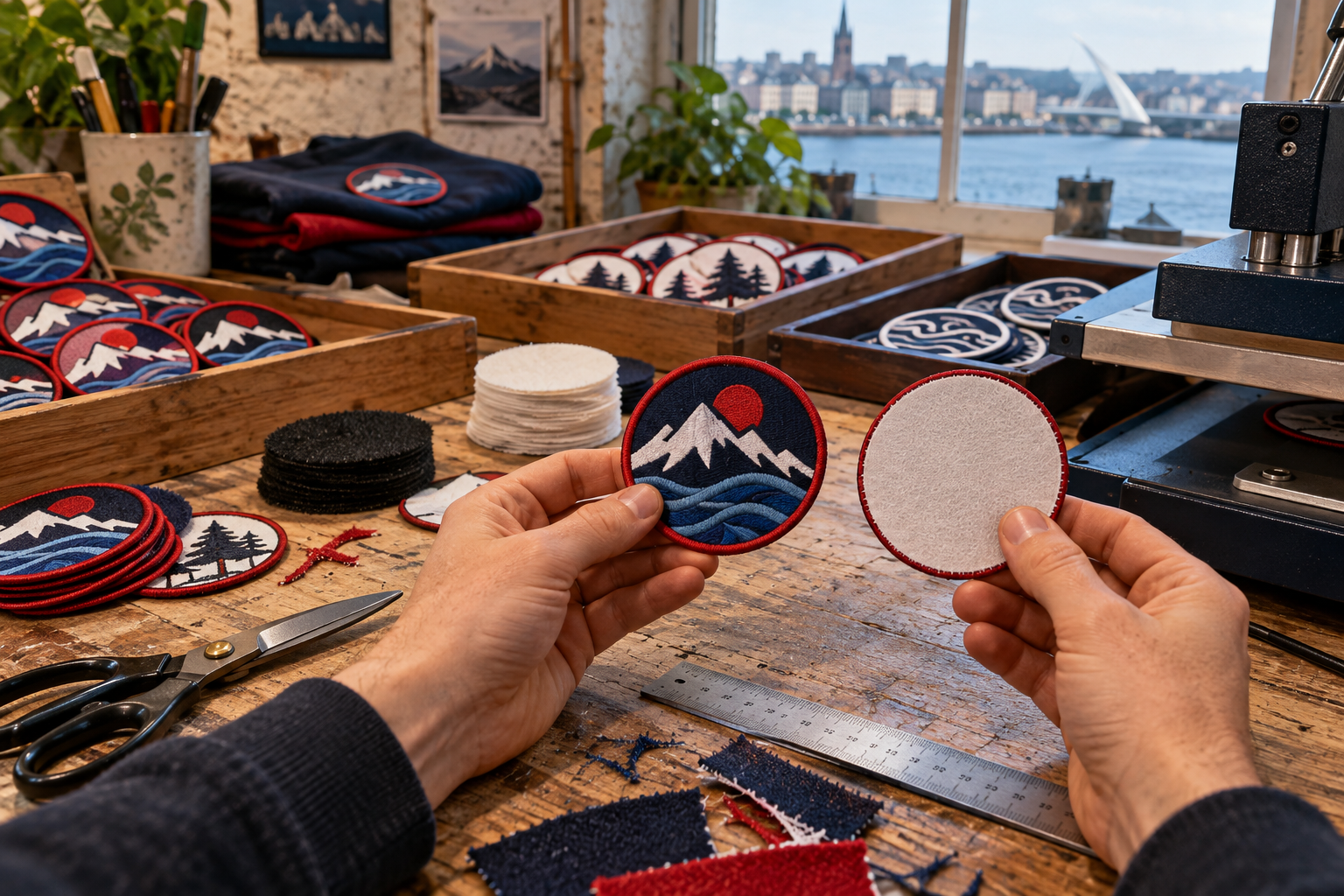
What is the difference?
An iron-on patch has a layer of heat-activated adhesive on its back. Heat from an iron melts the glue into the fabric, and it grips as it cools.
A sew-on patch has no adhesive. It is attached with needle and thread through the border, by hand or machine.
Both start as the same patch: the backing is added at the end of production. You choose it when you order.
Iron-on vs sew-on at a glance
| Iron-on | Sew-on | |
|---|---|---|
| Time to attach | About a minute | 10–30 minutes by hand |
| Tools | Household iron, cloth | Needle, thread, pins |
| Fabrics | Cotton, denim, polycotton | Any fabric |
| Durability | Good; can lift after many hot washes | Excellent; lasts as long as the garment |
| Can be moved | Hard to remove cleanly | Unpick and move |
| Leather and nylon | No | Yes |
| Stretchy sportswear | No | Yes, with care |
| Patch stiffness | Slightly stiffer from the glue | Softer and more flexible |
When should you choose iron-on?
Iron-on suits quick, casual decoration on heat-safe fabrics:
- Tote bags, cotton t-shirts and sweatshirts
- Denim jackets and jeans for fashion use
- Caps (with care; see how to put a patch on a cap)
- Fundraiser and event patches that buyers will apply themselves
- Kids' clothes where you want a fast fix over a hole
See your artwork as a custom Ireland patch before you buy. Free digital mockup in 12 hours — 5-piece minimum per design. We do not produce until you approve.
GET A FREE MOCKUPIf you go with iron-on, follow our step-by-step iron-on guide, including the press from the inside of the garment that most people skip.
When should you choose sew-on?
Sew-on is the right choice whenever a patch must survive real use:
- Workwear, uniforms and school jumpers washed every week
- Leather and suede jackets, including biker vests
- Nylon, rainwear and puffer jackets that cannot be ironed
- Wool varsity jackets
- Blazers, where a neat, permanent finish matters
- Anything you will wash at 40°C or above
Our guide on how to sew a patch onto a jacket covers hand and machine methods.
Can you use both?
Yes, and it is the most reliable method for cotton and denim. Order iron-on backing, press the patch in place so it cannot slide, then stitch around the border. The glue stops the edges curling and the stitches make the patch permanent. Many people order iron-on for this reason even when they plan to sew.
What about Velcro and other backings?
Velcro (hook and loop) is the third common option when you need to remove or swap patches. It suits uniforms, bags and tactical-style gear. Other backings include peel-and-stick adhesive for temporary use, safety pins and plastic backing. Our guide to every patch backing explained compares them all, and Velcro patches explained goes deeper.
Ready to spec type, size, backing, and quantity? Open the quote form for a free 12-hour mockup and Ireland-wide shipping after approval.
GET A FREE MOCKUPFive real-life examples
- A crest for a cotton club hoodie that is washed every week: iron it on to position it, then stitch the edge. - A fundraiser patch sold to supporters: iron-on, because most buyers will not sew, with a note suggesting a few stitches for jackets. - A name tab on a chef's jacket washed at 60°C: sew-on, because hot washes soften adhesive. - A crest on a wool varsity jacket: sew-on, because wool should not be ironed at high heat. - A patch on a rucksack that changes between trips: Velcro, on a sewn loop panel.
Does backing change the price?
Iron-on and sew-on are both standard backings and the cheapest options. Velcro and hardware backings cost more. See our custom patch cost guide for how backing affects your quote.
Which backing works with which patch type?
| Patch type | Iron-on | Sew-on | Velcro |
|---|---|---|---|
| Embroidered | Yes | Yes | Yes |
| Woven | Yes | Yes | Yes |
| Printed | Yes | Yes | Yes |
| Chenille | Yes (cotton only) | Yes | Rarely |
| PVC | No | Yes (sewing channel) | Yes |
| Leather | Heat-activated on caps only | Yes | Possible |
What this guide is based on
This comparison reflects how Irish Customized Patches advises customers choosing a backing, based on the fabric, use and washing of the garment. Tell us what your patch is going on when you request a quote and we will recommend a backing on your free mockup. Get a free mockup.