
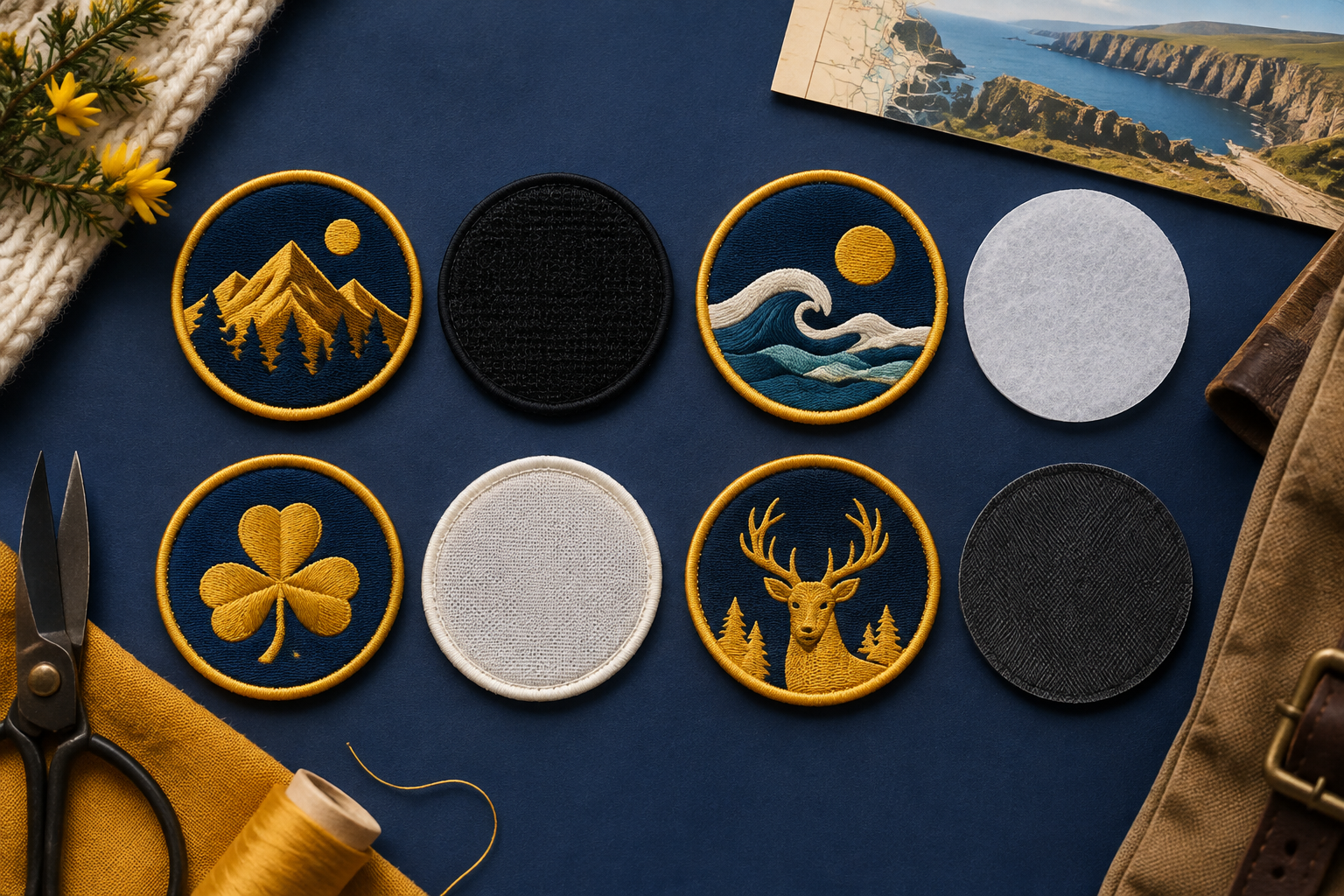
What is a patch backing?
The backing is whatever is on the back of a patch to attach it. It is added at the end of production, after the patch is made and its border finished, so the same patch design can be ordered with different backings. Choosing the right one depends on three questions:
- What fabric or surface is the patch going on?
- How often will it be washed?
- Does the patch ever need to come off?
The six backings compared
| Backing | How it attaches | Durability | Removable | Best for |
|---|---|---|---|---|
| Sew-on | Stitched through the border | Excellent | Only by unpicking | Uniforms, workwear, leather, anything washed often |
| Iron-on | Heat-activated glue | Good | No | Cotton, denim, totes, caps |
| Velcro (hook and loop) | Hook on patch, loop on garment | Very good | Yes | Uniforms, bags, tactical-style gear |
| Peel-and-stick adhesive | Pressure-sensitive glue | Low | Yes, once | Events, laptops, temporary use |
| Safety pin | Pin sewn to the back | Moderate | Yes | Lanyards, scarves, occasional wear |
| Plastic | Thin stiff sheet on the back | n/a | n/a | Keeping large patches flat and rigid |
1. Sew-on
A sew-on patch has no adhesive or hardware; the border is stitched to the garment. It works on every fabric, including leather, nylon and wool, and lasts as long as the garment. It takes longer to attach, and many people use a tailor or local alterations shop for jackets. See how to sew a patch onto a jacket.
2. Iron-on
A layer of heat-activated adhesive bonds the patch to the fabric with an iron in under a minute. It is ideal for cotton, denim and polycotton but not for nylon, leather, waterproof or stretchy fabrics. See how to iron on a patch and iron-on vs sew-on patches.
3. Velcro (hook and loop)
The rough hook side is sewn to the patch and the soft loop side to the garment. It is the standard for tactical-style jackets, backpacks and uniforms where names, roles or morale patches change. See Velcro patches explained.
See your artwork as a custom Ireland patch before you buy. Free digital mockup in 12 hours — 5-piece minimum per design. We do not produce until you approve.
GET A FREE MOCKUP4. Peel-and-stick adhesive
A sticky backing covered by a paper liner. Peel and press onto a smooth surface such as a laptop sleeve, notebook or event badge. It does not survive washing and loses grip over time, so treat it as temporary.
5. Safety pin
A small safety pin or brooch pin sewn to the back lets the patch be worn without sewing and moved freely. Good for scarves, lanyards, pinboards and event wear.
6. Plastic backing
A thin plastic sheet bonded to the back to stiffen a patch, so large or thin patches lie flat and keep their shape. It is often combined with sew-on, and it makes patches easier to display or frame.
What about magnetic backing?
Magnetic backings, with one magnet on the patch and another inside the garment, are sometimes used for staff badges on delicate fabrics. They are less common for fabric patches and are not suitable for anyone with a pacemaker or other implanted medical device. If you need one, ask when you request a quote and we will confirm whether it suits your patch.
Which backing for which patch type?
- Embroidered, woven and printed: all six are possible. - Chenille: sew-on is best; iron-on for cotton hoodies. - PVC: sew-on through a stitching channel, or Velcro. Iron-on does not bond to rubber. - Leather: sew-on, or heat-activated adhesive for caps.
Ready to spec type, size, backing, and quantity? Open the quote form for a free 12-hour mockup and Ireland-wide shipping after approval.
GET A FREE MOCKUPChoosing a backing in three questions
1. Can the fabric be ironed at the cotton setting? If not, rule out iron-on. 2. Will the garment be washed weekly or at 40°C and above? If so, choose sew-on. 3. Does the patch need to come off or move between garments? If so, choose Velcro or a safety pin.
If you answer "not sure" to any of these, sew-on is the safe default.
How does backing affect price?
Sew-on and iron-on are standard and the cheapest options. Velcro and safety pins add materials and a production step, so they cost more. See the custom patch cost guide for how backing fits into a quote.
Can you order the same patch with two backings?
Yes. A club might order crests with iron-on backing for supporters and sew-on for players' jackets. Each backing counts as a separate design with its own 5-piece minimum, because it is a separate production step.
What this guide is based on
This comparison reflects the backing options and advice Irish Customized Patches gives customers. Tell us what your patch is going on when you request a quote, and we will recommend a backing on your free mockup. Request a free mockup.