
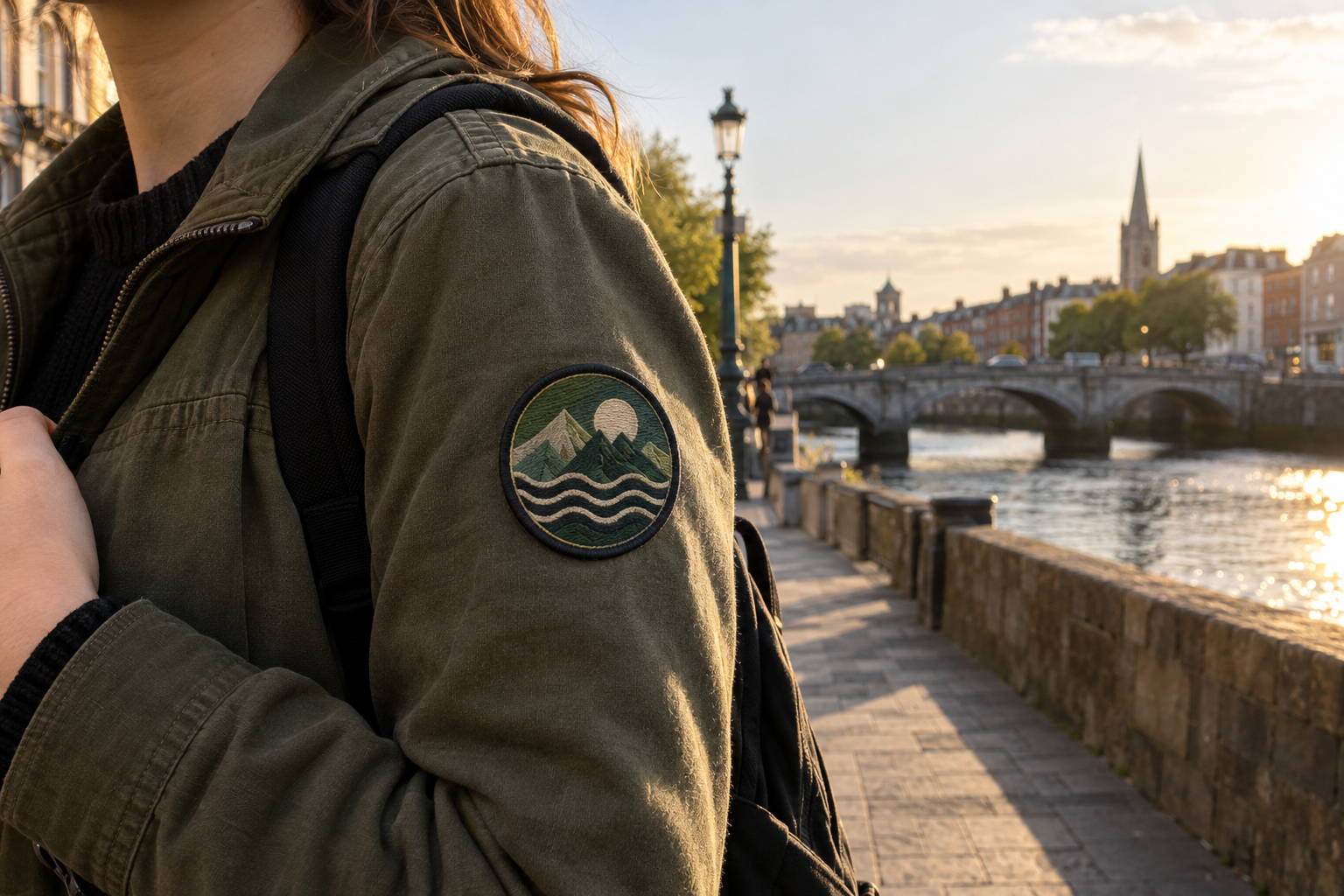
How is patch size measured?
Patch size is usually quoted as the longest side. A patch 8 cm wide and 5 cm tall is an "8 cm patch". Some suppliers use the average of width and height; we always show the exact width and height on your mockup so there is no confusion.
All sizes on our site and quotes are in centimetres, with inches in brackets on request.
Typical patch sizes by position
| Position | Typical size (cm) | Approx. inches |
|---|---|---|
| Cap front | 5–6 wide | 2–2.5 |
| Beanie cuff | 5–7 wide | 2–2.75 |
| Left chest logo | 7–10 | 2.75–4 |
| Name tab | 8–10 × 2.5–5 | 3–4 × 1–2 |
| Upper sleeve | 7–9 | 2.75–3.5 |
| Shoulder flag | 7–8 × 4.5–5 | 3 × 2 |
| Bag or backpack | 8–10 | 3–4 |
| Hoodie centre chest | 15–25 | 6–10 |
| Chenille chest letter | 15–20 tall | 6–8 |
| Jacket back | 20–30 | 8–12 |
| Biker back patch | 25–30 | 10–12 |
How to measure for your own garment
1. Put the garment on, or lay it flat. 2. Mark the area where the patch will go with masking tape; see the patch placement guide. 3. Measure the width and height of the space in centimetres. 4. Leave a margin: a patch should not run into seams, pockets, zips or the edge of a cap panel. 5. Cut a paper template at your chosen size and hold it on the garment to check it looks right.
The paper test is the most useful step. A size that sounds right on a quote often looks too big or too small once it is on the garment.
How size affects readability
Text and fine lines need a minimum size to stitch clearly:
See your artwork as a custom Ireland patch before you buy. Free digital mockup in 12 hours — 5-piece minimum per design. We do not produce until you approve.
GET A FREE MOCKUP- Embroidered text: about 6 mm tall
- Woven text: about 3 mm tall
- Lines: about 1 mm thick
If your logo includes small text, shrinking it to fit a cap may push the text below these limits. Either increase the size, simplify the design, or choose woven patches. Our guide to preparing artwork for embroidery explains these limits.
How size affects price
Size is the biggest single factor in price. Stitch count grows with area, and area grows faster than width: a 10 cm patch has roughly four times the area of a 5 cm patch. Dropping a centimetre or two can noticeably reduce the cost without changing the look much. See our custom patch cost guide.
Size and patch type
| Size | Best patch types |
|---|---|
| Under 5 cm | Woven, printed, PVC; embroidery only for bold simple designs |
| 5–10 cm | All types |
| 10–20 cm | Embroidered, chenille, printed, PVC |
| Over 20 cm | Embroidered with reduced coverage, chenille, printed |
Chenille needs at least about 8 cm to look right. Large embroidered patches often use 50 to 75% coverage so they stay flexible and do not become heavy.
Sizes for children's clothing
Scale down by about 20 to 30% for children's garments. A chest logo that is 9 cm on an adult jacket might be 6 to 7 cm on a child's hoodie. School crests are often ordered in one size for all years; check it looks right on the smallest blazer.
Ready to spec type, size, backing, and quantity? Open the quote form for a free 12-hour mockup and Ireland-wide shipping after approval.
GET A FREE MOCKUPCommon sizing mistakes
- Choosing a size from a photo online. Photos are rarely to scale; always check with a paper template. - Using the same patch for caps and jackets. A 9 cm chest crest is too big for most caps; order a smaller version. - Forgetting the border. A merrowed border adds a few millimetres all round, so allow for it in tight spaces like pockets. - Ignoring curves. Caps, sleeves and bags are curved, and a patch that is too wide will not sit flat. - Shrinking a busy logo. If small text drops below the readable minimum, simplify the design or switch to woven.
Quick sizing rules of thumb
- If it goes on a cap, think 5 to 6 cm. - If it goes on a chest or sleeve, think 7 to 10 cm. - If it goes on a back, think 20 to 30 cm. - If it carries a name, think 8 to 10 cm wide. - If in doubt, cut a paper template and hold it on the garment.
Ordering more than one size
Many clubs and brands order the same design in two sizes, such as 8 cm for jackets and 5 cm for caps. Each size counts as a separate design with its own 5-piece minimum. Smaller versions may need simplified detail, which we show on the mockup.
What this guide is based on
These are the typical sizes Irish Customized Patches recommends for each position on adult garments. Every garment is different, so we confirm the size against your design on the free mockup. Request a free mockup.